Telephone/WhatsApp:+86 156 2656 0610

Telephone/WhatsApp:+86 156 2656 0610
Email:info@seekmach.com

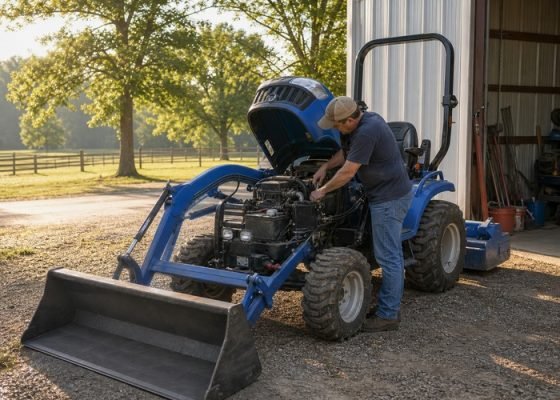
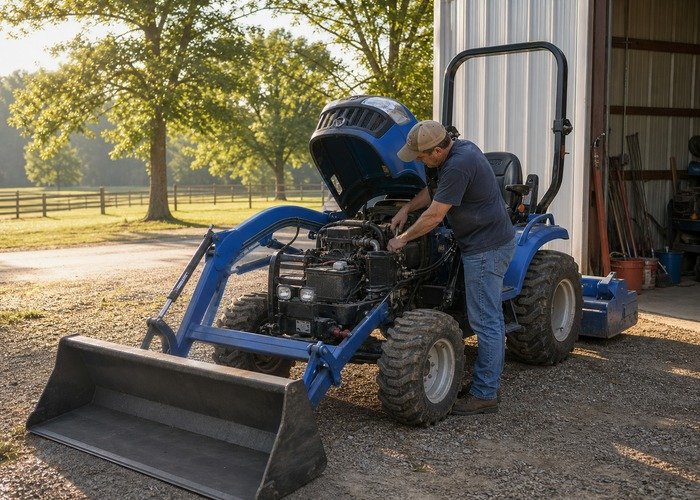
A tractor that will not start has a way of stopping the whole day before the real work even begins. The driveway still needs grading, the mower is still sitting in tall grass, and the loader bucket is usually empty right when you need it full. The good news is that many no-start problems can be narrowed down with a calm sequence instead of random part swapping. If you are comparing or maintaining a machine from the SeekMach tractor category, use this guide as a practical checklist, then confirm the exact procedures in the operator manual for your tractor.
Start with the symptom, not the guess. “Won’t start” can mean the starter does not click, the starter clicks but does not turn, the engine cranks slowly, the engine cranks normally but does not fire, or the engine fires briefly and dies. Those are different problems. A weak battery, loose ground cable, blocked fuel flow, clogged air path, disabled safety interlock, cold-start mistake, or operator control left in the wrong position can all feel like the same failure when you are already in a hurry.
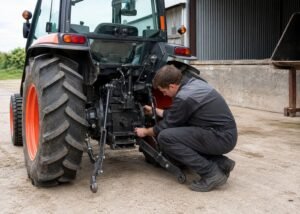
Before touching anything, park on level ground, lower attachments, set the brake, place all controls in neutral, remove loose clothing from the work area, and keep bystanders away. Tractor starting systems connect electricity, fuel, rotating parts, and heavy implements in one place. The OSHA agricultural operations overview is a useful reminder that routine farm and property equipment still deserves deliberate safety habits.
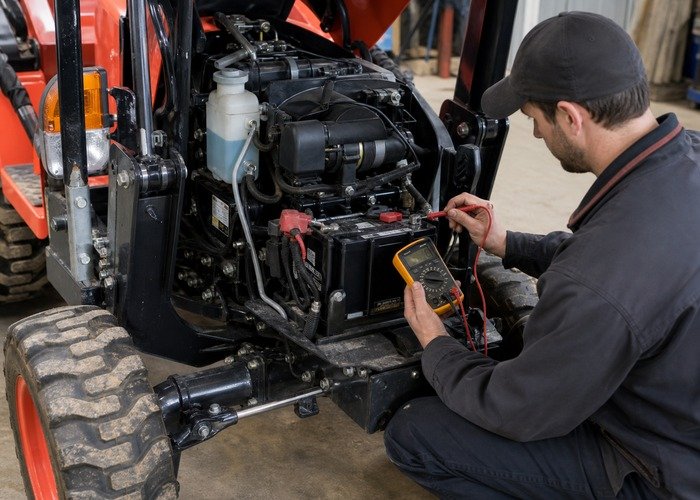
Do not open the hood until you have listened to the machine. Turn the key once and pay attention. A single click often points toward battery voltage, cable condition, starter solenoid, starter motor, or ground connection. Rapid clicking usually means the circuit is trying but voltage drops under load. Slow cranking suggests weak battery capacity, poor cable connection, thick oil in cold weather, or starter drag. Normal cranking with no firing points you toward fuel, air, glow plugs or intake heat on diesel engines, ignition on gasoline engines, or a safety shutdown.
Keep a small notebook or phone note for this diagnosis. Record outdoor temperature, last service date, fuel age, whether the tractor sat in rain, whether it was pressure washed, and whether the problem appeared after attachment work. These details matter. A tractor that started yesterday before a battery cable was bumped needs a different path from a machine that sat for six months with old fuel.
| Symptom at the key | Likely first area | What to check before replacing parts |
|---|---|---|
| No dash lights, no click | Battery, fuse, main cable, key circuit | Battery posts, ground strap, main fuse, disconnect switch |
| Dash lights on, one click | Battery under load, solenoid, starter circuit | Cable tightness, voltage drop, corrosion, neutral controls |
| Rapid clicking | Low voltage or poor connection | Battery charge, terminal condition, ground connection |
| Slow cranking | Battery capacity, cable resistance, cold oil | Load test, cable heat, correct oil grade, starter mounting |
| Cranks but no fire | Fuel, air, heat or ignition, safety shutdown | Fuel level, shutoff valve, filters, air intake, interlocks |
| Fires then dies | Fuel restriction, venting, water, blocked filter | Fuel cap vent, water separator, filter bowl, line restriction |
This table will not replace a service manual, but it keeps the first hour honest. The common mistake is jumping straight to the most expensive part. A starter motor may be blamed when the ground cable is loose. A fuel pump may be blamed when the tank cap is not venting. A battery may be blamed when the PTO lever is not fully disengaged.
Most no-start checks begin at the battery because a tractor needs more than visible voltage. A weak battery may show acceptable voltage without load and still collapse when the starter asks for current. If you have a multimeter, record resting voltage, then watch voltage during cranking. If you do not have test equipment, at least inspect the posts, clamps, ground strap, and cable insulation before buying anything.
Corrosion can hide under the clamp where it is easy to miss. A cable can look tight and still be loose enough to create high resistance. The ground connection on the frame or engine block matters just as much as the positive cable. Remove the key before working around terminals, and disconnect according to the manual. If a cable becomes hot during a start attempt, that is a clue that resistance is stealing current.
Cold weather changes the picture. Oil thickens, chemical battery output falls, and a battery that seemed fine in warm weather may not deliver enough current on a frosty morning. Keep the battery charged, use the oil grade specified for the season, and follow the cold-start procedure exactly. The University of Minnesota Extension farm machinery resources and Penn State Extension tractor safety materials are helpful for thinking about seasonal machinery readiness as part of the whole work plan, not a last-minute repair.
Modern tractors often use safety switches tied to the seat, clutch, brake, transmission range, PTO, neutral position, and sometimes attachment controls. These systems are there for a reason. Do not bypass them to “test quickly” and then forget. Instead, use the operator manual to understand the correct start conditions and confirm every lever and pedal is fully in the required position.
A very common field scene looks like this: the operator parks after mowing, leaves the PTO lever just short of the off detent, comes back later, and the tractor refuses to crank. Nothing is broken. The tractor is doing exactly what it was designed to do. The same can happen with hydrostatic pedals that do not return fully to neutral because of debris, mat position, linkage stiffness, or operator habit.
Seat switches deserve respect. If the tractor starts only when you shift weight, or cuts out when you bounce, do not tape the switch down. Inspect the seat base, wiring, connector, and switch position. The NIOSH agriculture safety program emphasizes practical prevention around machinery, and start-interlock discipline belongs in that prevention mindset.
For diesel tractors, fuel problems often show up as cranking without firing, firing briefly and dying, or losing power after a short run. Verify the obvious first: enough fuel in the tank, correct fuel for the season, open fuel shutoff valve, and no kinked line. If the machine has a water separator or sediment bowl, check it according to the manual. Water, algae, dirt, and waxed fuel can stop a tractor that otherwise seems healthy.
Do not assume the gauge is correct. A sloped parking spot can uncover a pickup, and old gauges sometimes lie. If the tractor ran out of fuel, follow the specified bleeding or priming procedure. Cranking endlessly to self-prime can overheat the starter and drain the battery before the real issue is solved.
For gasoline tractors or small utility machines, old fuel and carburetor varnish remain common. Fuel that sat through a season can cause hard starting, rough running, or no start. Use clean fuel, keep containers sealed, and drain or stabilize fuel according to the manual during storage. If you maintain several property machines, the SeekMach product overview can help separate tractor issues from mower or utility-equipment habits that sometimes get mixed together.
An engine needs air as much as fuel. A plugged air filter, blocked intake screen, rodent nest, mud, leaves, or snow packed around the intake can make starting difficult and running smoky or weak. Inspect without damaging the filter media. Do not blast a paper element aggressively with high-pressure air unless the manual allows it; a torn filter can let dirt into the engine.
Look at the exhaust path too. It is less common, but a restricted exhaust can create confusing symptoms. Machines stored outdoors or in sheds can collect debris in unexpected places. If the tractor started poorly after a long storage period, take a few minutes to inspect intake and exhaust openings before assuming an internal engine issue.
Diesel engines may rely on glow plugs, intake heaters, grid heaters, or other cold-start aids. If the tractor cranks normally but will not fire in cold weather, verify the indicator lights, fuses, relay behavior, and waiting time described by the manufacturer. Do not use starting fluid unless the manual explicitly permits it; on engines with glow plugs or intake heaters, it can cause severe damage or injury.
Gasoline engines add ignition components to the checklist. Spark plug condition, plug wire connection, kill circuit, and carburetor condition may matter. Still, the same rule applies: classify the symptom first. A gasoline engine that cranks normally with no spark is different from one that has spark but no fuel.
Sometimes the engine is fine, but it is being asked to start under load. Hydraulic controls not centered, a cold hydraulic system, a stuck attachment, or an implement left in an awkward position can increase starting strain or trigger safety logic. Lower implements when parking, relieve pressure using the approved procedure, and check that loader joystick and remote levers have returned to neutral.
If your work often combines tractor loader use with grading, mowing, and attachment changes, the broader SeekMach application solutions page is a useful place to think through workflow. A tractor that starts reliably but repeatedly struggles after attachment changes may need a better parking routine, cleaner couplers, or operator training rather than a new battery every season.
Consider a compact tractor used for driveway grading and rotary mowing. It starts fine all spring, then one afternoon gives a heavy click and nothing else. The owner assumes the starter has failed because the lights still come on. Before ordering a starter, the operator checks battery voltage, cleans the posts, and then notices the frame ground bolt is slightly loose under a dusty layer of grease. After cleaning and tightening the connection, the starter turns normally.
That example is not a universal answer. It is a reminder to test the current path. Electrical systems need both sides of the circuit. A clean positive terminal is not enough if the return path is poor. The fastest repair is often the one you can prove, not the one you can imagine.
Stop if you smell burning insulation, see damaged wiring, find fuel leaks, hear grinding from the starter, discover a cracked battery case, or suspect pressurized fuel-system work beyond basic inspection. Also stop if the manual requires a scan tool, pressure gauge, or trained service procedure. A no-start problem can become a bigger failure when repeated cranking overheats components.
If the tractor is under warranty or is part of a business schedule, record the checks you performed and the exact symptom. That makes a service call more useful. “Slow crank at 38 degrees after sitting three weeks, battery reads low under load, cables cleaned” is much better than “it will not start.”
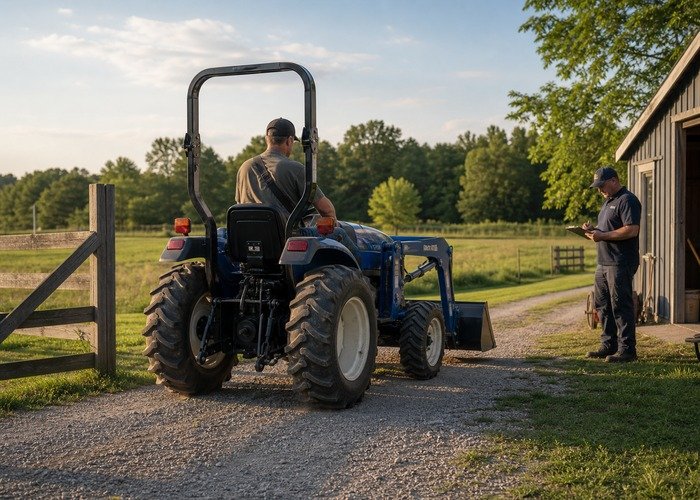
Repeated no-start events sometimes expose a planning issue rather than a single maintenance failure. A tractor parked outdoors with several implements attached, used for short cold starts, and then asked to dig, lift, mow, and haul may be doing too many different jobs in poor conditions. If trenching is the main work, review the SeekMach excavator application guide before forcing a tractor-loader combination into work it cannot do efficiently. If repeated material handling in tight spaces is the daily pattern, the SeekMach skid steer loader lineup may be worth comparing.
The best no-start repair is a routine that prevents the next one. Keep terminals clean, charge the battery during long storage, inspect ground straps, store fuel properly, service filters on schedule, park with PTO off and controls neutral, and write down symptoms before memory fades. In dusty mowing or loader work, clean screens and inspect air paths more often than the calendar suggests.
Build a small start kit for the tractor shed: multimeter, battery terminal brush, correct wrenches, flashlight, clean rags, spare fuses specified by the manual, and the operator manual. Keep jump-start instructions with the machine, but do not jump a battery that is frozen, leaking, cracked, or obviously unsafe.
For new buyers, starting reliability should be part of the pre-purchase inspection. On a used tractor, ask to see a cold start rather than a machine already warmed up. Watch the dash, listen to cranking speed, check smoke behavior, and inspect cables after the test. If the buyer journey includes comparing tractor size or attachments, stay anchored to the exact jobs on the SeekMach tractor product page rather than chasing one headline specification.
A click often means the start circuit is being engaged but the starter is not receiving enough usable current or cannot turn. Check battery charge, terminal corrosion, ground cable condition, neutral controls, and starter wiring before assuming the starter motor has failed.
Yes. Depending on the tractor, PTO position, seat switch, clutch pedal, brake, hydrostatic pedal, or neutral switch can prevent cranking. Follow the manual and do not bypass safety switches as a permanent fix.
Only if the operator manual specifically permits it. Engines with glow plugs or intake heaters can be damaged, and the practice can be dangerous. Use the approved cold-start procedure instead.
Replace it when testing shows it cannot hold charge or deliver current reliably, not simply because of age. Storage, temperature, vibration, charging habits, and cable condition all affect battery life.
A basic multimeter is one of the most useful tools. It helps separate a weak battery, poor connection, and voltage-drop issue from fuel or mechanical problems.
Watch a practical tractor no-start troubleshooting video here: tractor starting diagnosis on YouTube. Then work the problem in order: symptom, safety conditions, battery and cables, interlocks, fuel, air, heat or ignition, and only then deeper service checks. A tractor that will not start is frustrating, but a clear sequence keeps the repair grounded in evidence.