Telephone/WhatsApp:+86 156 2656 0610
Telephone/WhatsApp:+86 156 2656 0610
Email:info@seekmach.com

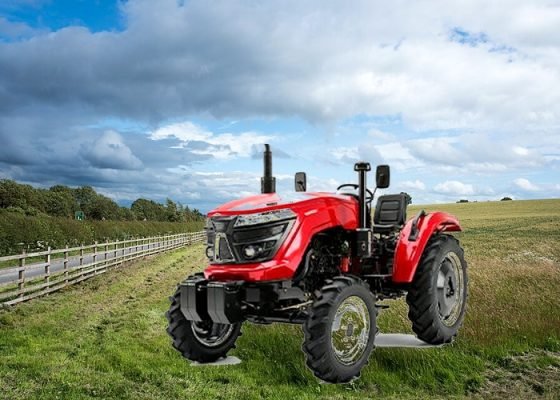
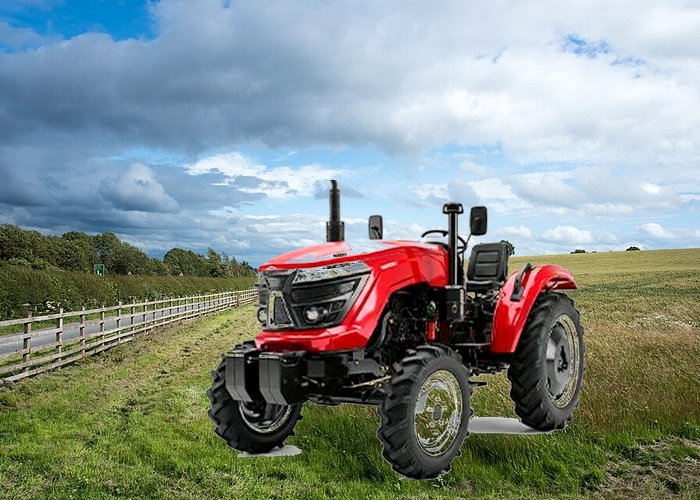
The best tractor attachment is not the one that looks most capable in a dealer photo. It is the one that removes a repeated bottleneck on your property without exceeding the tractor’s weight, hydraulic, power, or stability limits. A landowner who moves gravel every month needs a different first purchase from someone who cuts pasture twice a year, maintains woodland trails, or handles feed and fence materials every week.
Start with a written job list before looking at implements. Record what you move, cut, grade, dig, lift, spread, or carry; how often the work occurs; the narrowest gate; the steepest working area; and where the attachment will be stored. Then compare that list with the tractor’s operator manual and specification plate. If you are still choosing a machine, review SeekMach’s tractor range for property work before committing to an attachment ecosystem.
The practical goal is a small set of tools that covers most of the year. For many rural properties, that means a front loader bucket, a grading tool, a mower or cutter, and one handling attachment. The correct order depends on the work, not acreage alone. Ten wooded acres can create more material-handling work than twenty open acres, while a short gravel drive may need less grading capacity than a steep half-mile lane.
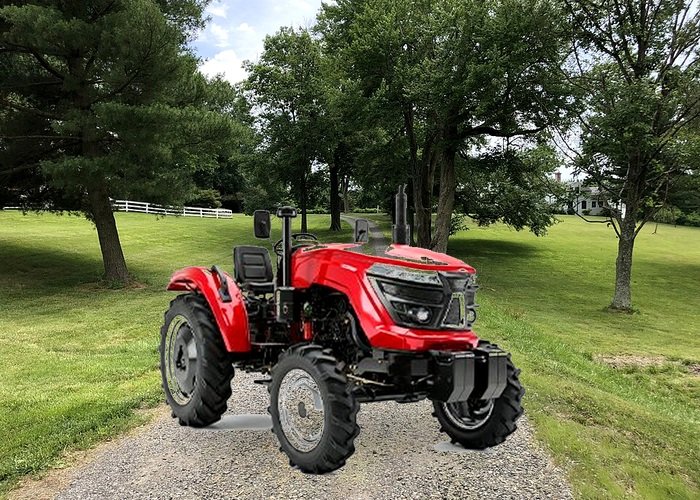
Walk the property and divide tasks into six groups: material handling, vegetation control, surface maintenance, soil preparation, digging or post work, and seasonal cleanup. Note the material and scale. “Move stone” is too vague; “move one pallet of bagged material from the drive to the barn twice a month” gives you a load, route, surface, and frequency to plan around.
Frequency matters because hookup time is real work. An implement used every week should be quick to connect, easy to store, and ready without moving three other tools. An attachment used once a year may be better rented or hired with an operator. This is especially true for specialist tools such as trenchers, large augers, forestry cutters, and powered sweepers.
Also separate work that the tractor can perform from work it can perform safely. A loader may lift an object while the rear axle feels light, steering response changes, or the load blocks the operator’s view. The machine’s front-loader capacity and ballast requirements should govern the choice, not a successful one-time lift.
| Recurring job | Strong first option | Useful alternative | Main compatibility check |
|---|---|---|---|
| Loose soil, mulch, snow, gravel | General-purpose loader bucket | High-volume light-material bucket | Loader rating, bucket width, ballast |
| Pallets, logs, posts, bagged supplies | Pallet forks | Grapple for irregular material | Load center, fork rating, third function for grapple |
| Gravel drive maintenance | Box blade | Land plane or rear blade | Tractor weight, width, three-point category |
| Pasture and rough growth | Rotary cutter | Flail mower for finer residue | PTO power, cutter weight, driveline length |
| Lawn and finish areas | Finish mower | Mid-mount mower | PTO speed, deck width, turning space |
| Garden or seedbed preparation | Rotary tiller | Disc or cultivator | PTO power, soil condition, working width |
| Fence posts and planting holes | Post-hole auger | Hydraulic auger | Soil, bit diameter, hydraulic flow, guarding |
| Brush and storm cleanup | Grapple | Forks with careful rigging | Third-function hydraulics, load shape, visibility |
A standard bucket is often the most-used attachment because it moves loose material, back-drags surfaces, collects debris, and carries tools. It should match the tractor rather than simply being as wide as possible. A wider, deeper bucket holds more volume, but volume becomes weight quickly with wet soil, stone, or dense compost. A large bucket can encourage overloads even when the attachment itself is within the loader’s rating.
Choose bucket type by material. A general-purpose bucket is versatile. A light-material bucket provides more volume for snow, leaves, bedding, or dry mulch but is a poor signal of how much dense material can be carried. A tooth bar can improve penetration in compacted soil, though it changes the bucket edge and may be inconvenient when back-dragging a finished surface.
Keep the load low while traveling, slow before turning, and avoid working across slopes with a raised bucket. The NIOSH agricultural safety resources provide useful background for managing equipment hazards. The tractor manual remains the controlling source for ballast, tire pressure, and loader operation.
Forks are valuable for bagged supplies, fence posts, lumber, firewood cages, seed, feed, and shop equipment. They also expose the importance of load center. Loader lift ratings are measured at a defined point, while a long load or pallet placed far forward creates more leverage. A load that looks modest may exceed capacity when its center of gravity sits well in front of the pivot pins.
Measure the heaviest routine pallet and consider how accurately you can approach it. Fork-frame visibility, adjustable tine spacing, and a visible load backrest often matter more than maximum tine length. Long tines help reach deep pallets but make tight storage and turning more difficult.
Never carry a person on forks or a platform that is not approved for that purpose. Keep bystanders away from the travel path and lower the attachment before leaving the seat. For general machine safety responsibilities and training principles, consult OSHA agricultural operations guidance.
A grapple becomes compelling when branches, roots, logs, demolition debris, or storm material appear every season. It holds irregular loads that slide from a bucket and reduces repeated hand handling. However, a grapple normally requires a compatible quick-attach interface and a third-function hydraulic circuit. Add the grapple’s own weight to the material weight before comparing the total with loader capacity.
Root grapples, brush grapples, and rock grapples behave differently. Open-bottom designs let soil fall through while retaining roots and branches. Heavier construction may tolerate rough work but consumes more of the loader’s available capacity. Compact tractors often benefit from a lighter attachment that preserves useful payload.
Before adding hydraulically powered tools, compare the connection details with SeekMach’s broader product application solutions. Coupler style, pressure relief, hose routing, and safe disconnection affect everyday usability.
These three tools overlap, but they reward different operators. A box blade carries material between its side plates, cuts high areas, and fills low areas. Scarifiers can loosen compacted gravel, but the tool requires attention to top-link length and three-point control. A land plane is often easier for routine smoothing because material flows over and between its cutting edges. A rear blade can windrow, crown, ditch, and move snow, especially when it offsets or angles.
Match implement width to tractor track width, power, weight, and road condition. An implement that is too wide may stop the tractor in packed material; one that is too narrow leaves tire tracks or requires extra passes. A heavy tool can cut effectively but may unbalance a small tractor during transport.
Use shallow passes and repair drainage problems before repeatedly adding gravel. Water movement, not just traffic, often creates potholes. The USDA Natural Resources Conservation Service offers conservation and drainage context useful for rural land planning, while local rules may govern work near ditches and waterways.
Choose a cutter by vegetation and desired finish. A rotary cutter is suited to rough grass and brush within its rated material diameter. A finish mower uses multiple blades for a cleaner lawn-like result on smoother ground. A flail mower produces smaller residue and can be useful around orchards, paths, and mixed vegetation, but it has more cutting elements to inspect and may require more maintenance.
Do not infer cutter capability from deck appearance. Check required PTO power, rated blade speed, gearbox rating, driveline length, shielding, and total weight. A mower that is too heavy can make the front axle light when raised. One that is too wide may overload the tractor in tall, wet growth even if it works in short grass.
Inspect the work zone for wire, rocks, hidden posts, and people before cutting. Maintain the discharge exclusion area specified by the manufacturer. For additional rotary equipment safety context, the Penn State Extension farm safety library is a useful non-commercial reference.
A rotary tiller can create a seedbed quickly, mix amendments, and renovate compact garden areas. It is not a universal answer for wet soil, buried debris, or repeated deep cultivation. Working soil when it is too wet can smear and compact it. Repeated tilling can also affect structure, so decide whether the job is initial preparation, annual garden work, or vegetation control.
Compare tiller working width, rotation direction, offset capability, PTO requirement, and driveline protection. The tiller should usually cover the tractor’s tire tracks without demanding more PTO power than the tractor can deliver. Confirm correct driveline length with the hitch raised and lowered; a shaft that bottoms out can damage the tractor or implement.
For soil-specific planning, use local university extension advice. The Cooperative Extension System can direct owners to regional soil, pasture, and crop information rather than generic instructions.
A post-hole auger saves substantial labor when fencing or planting, but underground utilities, overhead lines, rocks, and entanglement hazards make planning essential. Contact the applicable utility-location service before digging. In the United States, 811 Before You Dig explains the notification process; elsewhere, use the local equivalent.
Select bit diameter for the actual post and backfill plan, not merely the largest bit the tractor can turn. A three-point auger has no positive down pressure on many tractors, so hard ground may require a different approach. Hydraulic augers can reverse and may offer better control, but they require correct auxiliary flow and pressure.
No one should approach a rotating auger. Shut down, remove the key, relieve stored energy, and follow the manual before clearing wrapped material. A helper should never push on the boom or bit while it is operating.
For snow, a loader bucket is versatile but slower and more likely to carry gravel. A rear blade is simple and useful for light or moderate events. A front blade improves visibility and pushing efficiency. A snow pusher contains material and suits open lots, while a blower moves snow away from narrow lanes and repeated piles.
Plan for the worst routine event, not a rare storm that may justify contracted help. Consider where snow can be stored, whether the route has drop-offs, how drifting behaves, and whether chains or additional ballast are approved. Seasonal tools need dry storage and a pre-season connection test; discovering a seized pin during the first storm creates avoidable downtime.
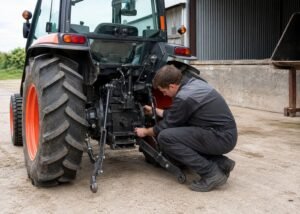
First, confirm the mounting interface: pin-on loader, skid-steer-style quick attach, three-point hitch category, drawbar, or another system. Similar-looking interfaces are not automatically interchangeable. Second, confirm weight and center of gravity. Third, compare PTO speed and power. Fourth, check hydraulic flow, pressure, couplers, return requirements, and whether a case drain is needed.
Also check geometry. A PTO shaft, hydraulic hose, top link, or attachment frame can clear in the working position but bind when fully raised or curled. Test the complete motion slowly in an open area before work. Watch for hose tension, tire contact, driveline compression, and interference with the hood or grille guard.
Finally, consider the operator. Heavy manual latches, awkward parking stands, and misaligned storage surfaces turn a ten-minute change into a frustrating job. Quick-attach convenience has little value if the attachment sinks into soil or rests at the wrong angle.
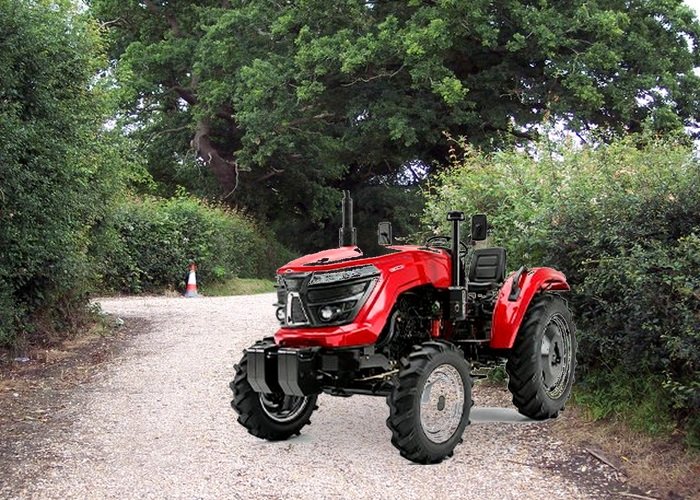
Store implements on a firm, level surface where the connection points remain accessible. Use stable stands designed for the attachment, cap hydraulic couplers, protect PTO shafts, and keep cutting edges away from walking routes. Paint marks on parking positions can help operators return tools to a connection-friendly angle.
Outdoor storage accelerates corrosion and allows water into places that should remain dry. If indoor space is limited, prioritize powered and precision attachments under cover. A simple inventory card can record grease points, gearbox oil, blade or tine condition, missing hardware, and the date of the last inspection.
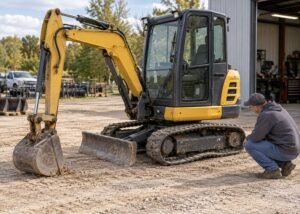
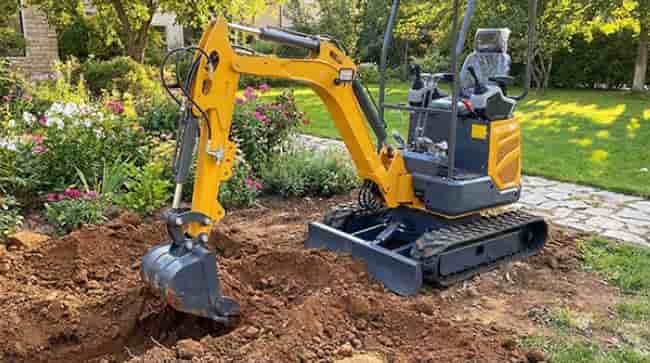
Browse the complete SeekMach machinery selection when planning a property-wide equipment system. If the work list includes tight-access digging that a tractor cannot handle efficiently, compare the role of an excavator for trenching and confined work rather than forcing one machine to perform every task.
Buy the loader tool that solves the most frequent handling task first. Add the surface-maintenance or vegetation tool used most often. Rent the next two specialist attachments before purchase and record setup time, job time, transport difficulty, and cleanup. If the rental repeatedly saves meaningful labor and fits the tractor without compromise, it has earned a place in the fleet.
When evaluating real use, watch the complete cycle in this rural-property tractor attachment video: hookup, travel, positioning, material movement, and finish quality. The dramatic moment is rarely the useful one. The pauses, turns, ballast, and repeated passes reveal whether the setup fits ordinary property work.
For many properties, a loader bucket, a grading tool, and a vegetation-control tool cover the broadest workload. Pallet forks often replace one of those when material handling is frequent. The correct first three come from the job inventory, not a universal package.
Forks suit pallets, lumber, posts, cages, and stable loads. A grapple is better for irregular brush, logs, roots, and storm debris. Forks are simpler because they normally need no auxiliary hydraulics; a grapple controls awkward material more securely.
Many mowing and grading tools are selected to cover the tire tracks, but width must remain compatible with tractor power, weight, terrain, and implement design. More width increases draft load, transport width, and leverage.
No. Renting is a low-risk way to test specialist tools and can remain economical for annual work. Ownership makes sense when availability, repeated use, and setup efficiency outweigh storage and maintenance.
No. Moisture, compaction, stones, roots, slope, and material density change the load. Use the attachment’s rated conditions and adjust pass depth, speed, and timing. Stop when the machine or tool shows signs of overload.
Write the job list, verify the machine specifications, measure every interface, and calculate attachment weight as part of the load. Plan ballast and travel routes before the first lift. Check storage and connection effort before purchase. Rent specialist tools, observe a complete work cycle, and choose the attachment that makes a repeated job safer and more predictable. A small, well-matched attachment set will usually outperform a shed full of tools bought without a clear job.