Telephone/WhatsApp:+86 156 2656 0610
Telephone/WhatsApp:+86 156 2656 0610
Email:info@seekmach.com

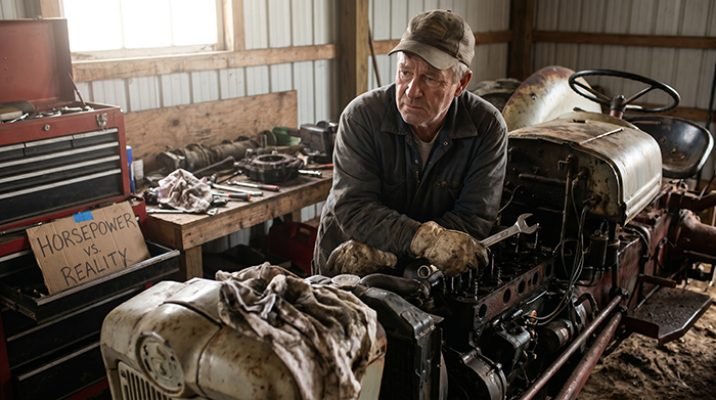
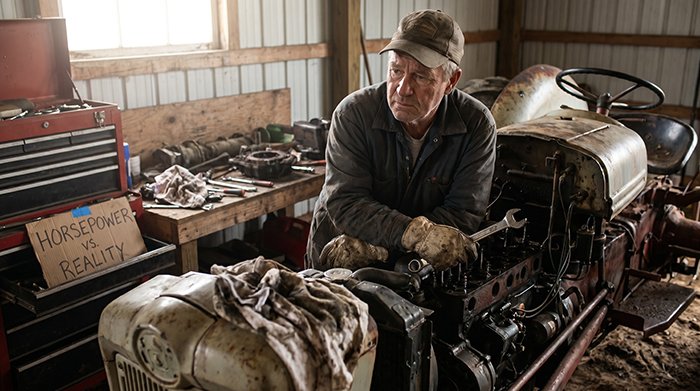
Buying a tractor based on engine horsepower alone is like judging a truck by its engine displacement — the number sounds impressive until real work exposes the gap between spec sheet and field performance.
Every tractor engine produces its maximum horsepower at the flywheel — a measurement taken under controlled lab conditions with minimal accessories attached. That figure is a theoretical ceiling, not a working reality. By the time power travels through the drivetrain, hydraulic system, cooling fan, and alternator, a meaningful portion has already been consumed before your implement ever engages.
This is where tractor PTO horsepower becomes the number that actually matters. The Power Take-Off (PTO) shaft is the direct mechanical link between the tractor and its implements — rotary cutters, tillers, balers, and beyond. As the Pape Machinery notes:
“The PTO horsepower is the most accurate measure of a tractor’s work capacity because it represents the actual power available to perform tasks.”
This disconnect between advertised engine ratings and deliverable output is what industry professionals call the Power Gap — and it’s far more consequential than most first-time buyers expect.
Consider a practical scenario: a compact tractor marketed at 50 engine HP stalls while running a mid-size tiller through dense soil. The machine isn’t defective. The engine rating simply never accounted for what the PTO shaft would actually deliver under load. You can explore how power demands scale with attachments to understand why this plays out repeatedly across the sub-100 HP segment.
Understanding where that power disappears — and exactly how much — is the critical next step.
Engine horsepower never travels to the PTO spline intact — every mechanical system between the crankshaft and the output shaft takes a cut before your implement sees a single watt of it.
According to TractorByNet Forum, PTO horsepower typically represents only 80% to 90% of a tractor’s rated engine horsepower — meaning a 60HP engine delivers somewhere between 48HP and 54HP at the shaft under real working conditions. That gap isn’t a defect. It’s physics.
Parasitic loads are the culprits. These are the onboard systems that draw engine power continuously, regardless of whether you’re cutting brush or sitting idle:
The 35HP–90HP class feels these losses most acutely. A 100HP machine losing 15HP still has 85HP to work with. A 35HP compact tractor losing the same percentage has almost no margin left for demanding implements.
This is exactly why the question “how much PTO horsepower do I need for a brush hog” matters so much at purchase time. A standard 5-foot rotary cutter requires 15–20 PTO HP minimum. On paper, a 25HP engine clears that bar. At the spline, it may not.
When reading factory spec sheets, always locate the dedicated PTO HP rating — not the engine HP figure. If a supplier only lists engine horsepower, treat that number as marketing until you verify the PTO output independently.
How power leaves the shaft is only half the equation — the other half is whether your implement is even spinning at the right speed.
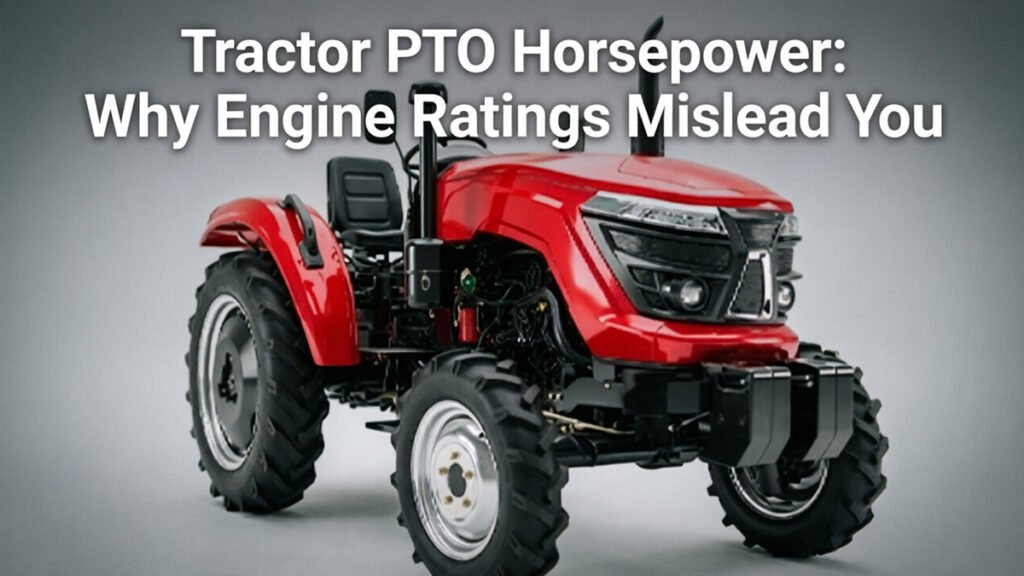
Understanding the difference between pto 540 rpm 1000 rpm standards is non-negotiable — choose the wrong one and you risk destroying equipment or turning a driveshaft into a projectile.
540 RPM is the baseline standard for the 35HP–90HP compact and utility tractor class, regulated by ASABE to ensure global attachment compatibility. This speed handles the majority of mid-range implements — rotary cutters, tillers, and finish mowers — without overtaxing the drivetrain. As a practical reference, most compact tractors in this class pair 540 RPM output with implements requiring 15–30 PTO HP.
1,000 RPM enters the picture for high-demand industrial and large-acreage implements — large rotary mowers, high-capacity grain augers, and industrial balers. These applications need the higher rotational speed to move greater volumes of material efficiently, and they’re almost exclusively paired with tractors above 90HP.
The critical danger lies in mismatched RPM speeds. Running a 540 RPM implement on a 1,000 RPM shaft — or vice versa — creates catastrophic mechanical stress. Bearings fail within minutes. At worst, a spinning driveshaft can shear, turning heavy steel components into high-velocity projectiles.
⚠️ Safety Warning: Never connect an implement to a PTO shaft without confirming both the RPM rating AND the spline count match. A physical fit does not mean a safe fit.
Spline count is the often-overlooked compatibility indicator:
Always verify spline count against the implement’s manual before connecting. That RPM compatibility question becomes especially critical when high-inertia implements like rotary cutters enter the equation — which is exactly where the next conversation begins.
A brush hog is one of the most unforgiving stress tests a tractor can face — and it exposes the gap between advertised horsepower and real-world capability faster than almost any other implement.
To understand why, it helps to revisit what a tractor PTO is at its mechanical core: a rotating output shaft that converts engine power into usable work for attached implements. That conversion works smoothly for steady-state loads, but rotary cutters introduce something different — rotational inertia.
High-inertia implements store energy in their spinning mass, then demand a sudden surge when that mass encounters resistance. According to Pape Machinery, implements like rotary cutters require a torque reserve beyond their base PTO horsepower rating to handle sudden encounters with thick vegetation. Without that reserve, the engine bogs, RPM drops below the critical 540 or 1000 threshold, and cutting performance collapses fast.
The standard industry rule of thumb: budget roughly 5 PTO horsepower per foot of cutter width. A 5-foot brush hog needs ~25 PTO HP minimum — more if you’re tackling dense growth.
| Cutter Width | Minimum PTO HP | Recommended PTO HP (heavy brush) |
|---|---|---|
| 4 ft | 20 HP | 25 HP |
| 5 ft | 25 HP | 35 HP |
| 6 ft | 30 HP | 45 HP |
| 7 ft | 35 HP | 55 HP |
In practice, the 35–90 HP tractor range hits what many operators call the “peak efficiency island” for rotary cutting — enough torque rise to absorb shock loads without excessive fuel burn. A 35 HP compact tractor sits right at the entry edge of this range for lighter brush work.
When a tractor lacks adequate torque rise, the symptom is predictable: the engine lugs down, the operator slows ground speed to compensate, and productivity drops sharply. This same dynamic applies across other high-demand rotary attachments — a pattern that extends naturally into stationary load applications like generators.
Stationary PTO applications expose the sharpest version of the engine vs PTO horsepower problem — because there’s no margin for inconsistency when you’re generating electricity.
For stationary tasks like grain augers, wood chippers, or generators, PTO rating is the only number that determines whether the job gets done. According to the Pape Machinery, the PTO rating — not engine output — is the sole metric that governs whether a stationary implement can complete its task.
Load Profile. A PTO-driven generator presents a fundamentally different demand curve than a rotary mower. Where a brush hog absorbs variable shock loads, a generator demands constant, sustained power. Any fluctuation in engine speed directly corrupts electrical output.
Why RPM Stability Is Non-Negotiable. Standard North American electrical systems require a steady 60 Hz frequency. To produce 60 Hz, most PTO generators must maintain exactly 540 or 1000 RPM at the shaft — no variation. Even a 5–10% engine speed drop causes frequency drift, which can damage sensitive electronics connected to the generator. In practice, this means the tractor’s engine must hold throttle position under load without hunting.
The Mobile Power Plant Case. This constraint is actually what makes tractors genuinely useful on remote construction or agricultural sites — they deliver portable, high-capacity power without requiring grid access or diesel gensets. A 60–80 PTO-hp tractor can realistically run lighting arrays, compressors, or water pumps simultaneously.
Community Validation. Across multiple threads in tractor-focused forums and Reddit communities like r/farming, experienced operators consistently flag one pattern: PTO generator failures trace back to pairing undersized tractors with peak-demand loads, not equipment defects.
Matching the right power source to the right workflow demands more than guesswork — it often requires purpose-built configuration from the supply chain up.
Choosing factory-direct heavy machinery from a certified OEM/ODM supplier is one of the most effective ways to close the PTO power gap before it becomes a field problem.
As previous sections established, the gap between engine horsepower and usable PTO output isn’t random — it’s shaped by drivetrain design decisions made long before a tractor reaches your property. OEM suppliers who understand power transmission at the component level can optimize those decisions from the ground up.
The right supplier doesn’t just build tractors — they engineer power delivery for specific load profiles. For operators running anything from a brush hog to a stationary PTO generator, that distinction is significant. Seekmach’s tractor lineup, which spans 35HP to 90HP, is built precisely for this range — where attachment diversity is highest and power-matching decisions matter most.
Three factors separate a well-sourced OEM from a generic supplier:
Eliminating middlemen also compresses procurement costs meaningfully, freeing budget for implement upgrades that further optimize actual PTO efficiency.
Of course, getting power to the spline is only half the equation — keeping that system reliable and safe over time is what the next section addresses directly.
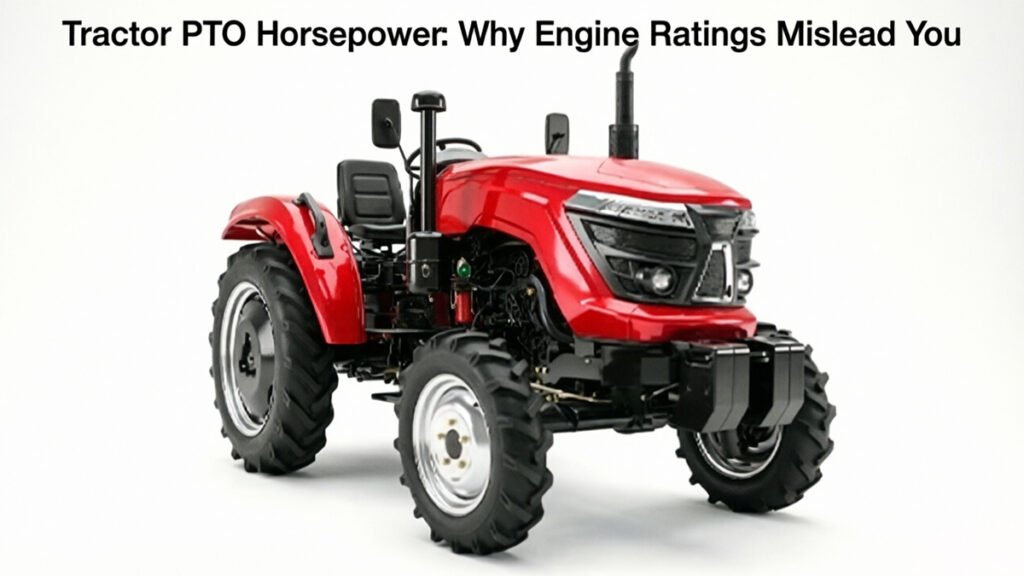
Proper PTO maintenance and safety discipline are what separate a productive tractor from a liability — and the margin for error is razor-thin.
PTO shielding is non-negotiable. The master shield covering the tractor’s stub shaft and the driveline guard over the rotating shaft must remain intact at all times during operation. According to ASABE, operating an implement at mismatched speeds can cause catastrophic bearing failure or create projectile hazards — a risk that compounds dramatically when shielding is absent or damaged.
Core safety and maintenance checklist:
PTO clutch wear is especially common in the 35–90 HP range, where operators frequently cycle the PTO on and off under partial load. Independent PTO clutch systems on contemporary mid-range tractors reduce this stress by decoupling attachment speed from the ground drive — but the clutch pack still requires periodic inspection, typically at 200-hour intervals.
| Component | Inspection Interval | Service Action |
|---|---|---|
| Universal joints | Every 8–10 hrs | Grease fittings |
| PTO shield/guard | Pre-operation | Inspect/replace |
| Clutch pack | Every 200 hrs | Inspect for wear |
| Spline shaft | Every 50 hrs | Clean, lubricate |
Getting the safety fundamentals right sets the foundation for smarter purchasing decisions — which is exactly where the real numbers matter most.
Engine horsepower is a marketing number; PTO horsepower is the number that actually does the work — and confusing the two costs operators real money.
With all the technical detail covered in previous sections, it helps to distill everything into a few non-negotiable rules before moving forward:
The core takeaway: spec your tractor by PTO horsepower, not the number on the brochure. Every other decision — implement selection, safety protocols, sourcing strategy — flows from that single discipline.
Understanding PTO horsepower separates operators who work efficiently from those who burn up equipment — and these four questions come up constantly in the field.
Can I run a 1000 RPM implement on a 540 RPM tractor?
Not without a gearbox adapter, and even then, with caution. A 1000 RPM shaft spinning at only 540 RPM delivers roughly half the rated implement speed, which typically means inadequate performance or complete failure to operate. Always match shaft speed to implement specification before purchase.
How do I calculate PTO horsepower if it’s not on the sticker?
Use the standard rule of thumb: PTO output typically runs 15–20% below rated engine horsepower, accounting for drivetrain losses. A 50 HP engine tractor realistically delivers 40–42 HP at the PTO shaft. For precision, request the manufacturer’s certified dyno sheet — reputable suppliers provide it. Seekmach’s 35HP–90HP tractor lineup, for example, ships with CE-certified specifications that include verified PTO output ratings, removing the guesswork entirely.
What is the best tractor size for a 6-foot brush hog?
A 6-foot rotary cutter typically demands 30–40 PTO HP under load. That means you need at least a 45–50 HP engine tractor to maintain safe operating margins — undersizing leads to chronic stalling and accelerated drivetrain wear. If your work regularly involves demanding land-clearing or high-output attachments, matching implement draw to verified PTO output — not advertised engine HP — is the only reliable approach.
Why does my tractor stall when I engage the PTO?
The most common causes are: an underpowered tractor for the implement, a slipping or worn PTO clutch, low engine idle speed at engagement, or hydraulic drag pulling from the same power source. Check forum diagnostics from experienced operators before assuming mechanical failure. Often, the real issue is a tractor that was simply spec’d too small for the job from the start.